Sunday, January 22, 2006

The Birthday Cake. Or, An Ode to Beach Night


How I wish I’d asked Clay to take a photo of it. The cake was beautiful, if I do say so myself. I made it for a Beach Night gathering last Wednesday, where, besides the usual joys of Beach Night, we also celebrated the birthdays of two of our members, E’s and mine.

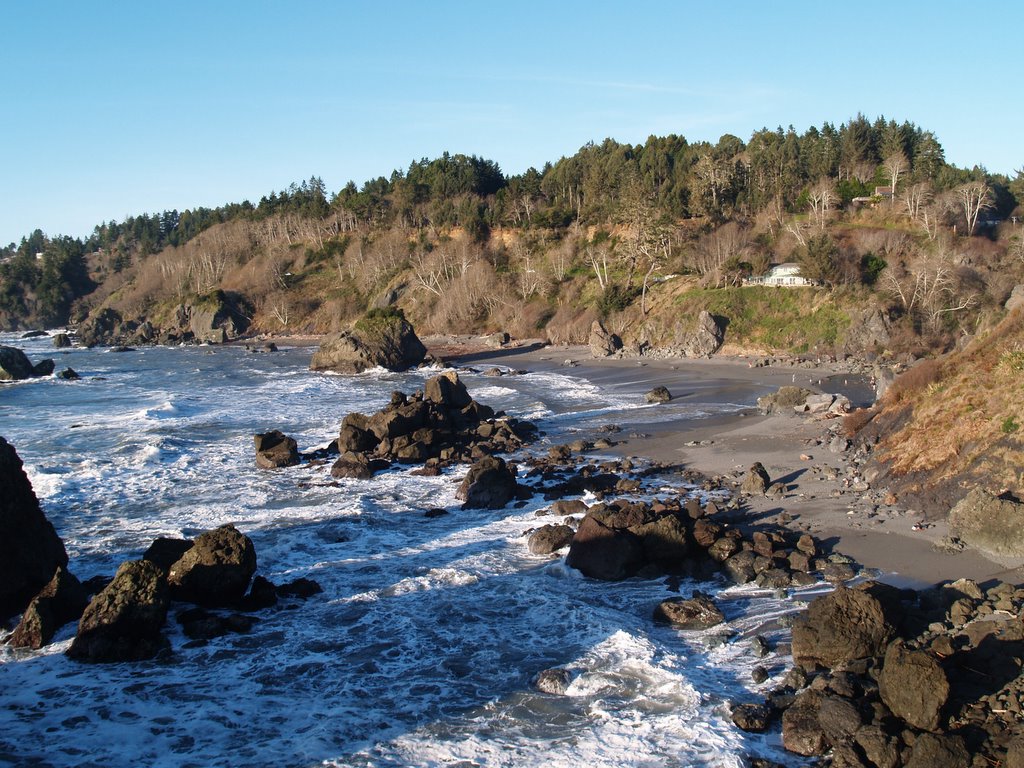
What is Beach Night, you ask? Well, I'm gonna tell you. Beach Night is a long-standing summer tradition among a group of friends who live up here in this most beautiful of places called The North Coast. We meet on the beach on Wednesday evenings to relax, talk, let the kids run around, have a beer or glass of wine and share dinner. Blankets laden with food are spread out on the sand. A cooking fire is built. Each family brings a dish to share and something to grill. It being strictly potluck, we never know what will be offered. Sometimes we get a delicious dessert. Sometimes we have a plethora of salads and sometimes no salad at all. It’s all part of the fun. After the grilling is finished and dinner consumed, we stoke up the fire, gather ‘round it, and for a while longer continue to bask in the pleasure of our camaraderie, lulled into a quiet appreciation of where we live by the soothing sounds of the ocean waves and the beauty of the setting sun. It’s quite a wonderful thing.

At the end of this past summer, not wanting to give up our weekly gatherings, we decided to keep the tradition going by having each family, in turn, host dinner at their house on a Wednesday night. Sometimes we’ll meet as often as once a week, sometimes a few weeks will go by, but we’ve managed to keep it going and we’re all very pleased it has worked out so well.

Back to last Wednesday. It being the middle of a rainy, windy, muddy, sometimes power-less (as in no electricity), and all together dismal winter, it seems that many of us were of the same mind when we prepared our food to share. I made a white bean and Italian sausage stew with skillet cornbread, D made an Anasazi bean and chorizo stew and blue cornbread, A made two pans of custard cornbread, G made a chili enchilada casserole and Mexican rice with wonderfully hot jalapenos and olives, and E made a hearty pizza. No salads. We laughed over the three different cornbreads and the variation-on-a-theme bean stews. Good, solid, high carb, winter fare. All accompanied by our favorite red wines, of course.

Then came the birthday cake, which is really why I started this post. Dense, bittersweet chocolate; three 8-inch layers worth. Each layer filled with crushed, sweetened raspberries and ever-so-slightly sweetened whipped cream. Frosted with more whipped cream and topped with shavings of bitter-sweet chocolate, it was a sight to behold and, oh my, it was delicious! The recipe for the batter may be found in the February 2006 issue of Bon Appetit magazine.

I followed the recipe as written, lowering the brown sugar content from 1 ¾ cups to 1 ½ cups. No low-carb substitutions were made; both the cake and the occasion called for the real thing. Because of the density of the chocolate layers, I decided to lighten up the overall effect by using raspberries and whipped cream. The original recipe calls for a vanilla cream filling and chocolate ganache frosting, but that's another cake for another time.

Topped by flaming rainbow-colored candles, the cake made its entrance into our softly lit dining room to the sounds of the Happy Birthday song. As it was served and the first bites taken, the room grew quiet. And then came that other sound which is so near and dear to my heart: “oooooohhh, yum!

Tuesday, January 17, 2006

Food Blog Sites I Like

The template I use for Christine Cooks does not have a place to list and link my favorite food blogs. I will be correcting that in the near future, but until then I'd like to list them and their links in this post. Do visit these sites when you have the time. There are so many more than the ones I've listed below. It's quite a community.

Some of my Favorite Blogs, from all manner of recipes, chefs and cookbooks, personal essays, rants and stories to restaurant reviews:

Becks & Posh
Chez Pim
Chocolate & Zucchini
Cook Sister!
Cooking with Amy
Culinary Muse
David Lebovitz
Farm Girl Fare
In Praise of Sardines
Kalyn's Kitchen
Kitchen Review
Leite's Culinaria
Meathenge
Movable Feast
Saute Wednesday
Seattle Bon Vivant
Simply Recipes
The Passionate Cook
Kate Hill's French Kitchen Adventures
Tastes of Humboldt (I started this blog last summer and have yet to follow through. I'm hoping that posting here (going public, as it were) will give me the kick-in-the-butt incentive I need to get a move on.

Monday, January 16, 2006

The Story of Pig


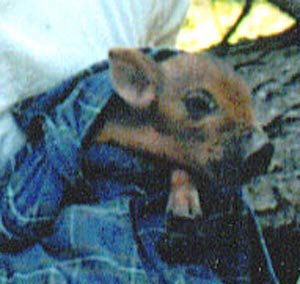
He whipped off his baseball cap and scooped her up. She fit neatly inside with room to spare, she was that small. As he looked around for the other one, a part of him was already regretting the snap-second decision. On the other hand, what could he have done? He'd just shot and killed the mother. Unable to locate the other, he stuffed the impossibly tiny, squealing female into his backpack, readied the sow to pack out, hoisted her onto his back and walked out of the hills.

Just earlier, he'd found himself in an impossible situation. Up in the hills, wild boar hunting with his roommate, he'd suddenly come across a boar in a thick patch of brush. Unable to determine the animal's gender, the boar's sudden, menacing rush towards him left him with no way to retreat quickly. Reacting in self-defense, he aimed and pulled the trigger. Only when the sow fell, did he see the two babies. One scurried away into the brush, lost instantly. The other got scooped up into a baseball cap, and so begins the story of Pig.

From his experience in raising hogs for show for an FFA high school project, he knew what to do. He stopped at the farm store on the way home to buy a nursing bottle and milk replacement. He made a bed of straw covered with a cardboard box shelter and set it out on the fenced-in patio of his apartment. Because of the demanding feeding schedule, he brought her to work with him, keeping her cool on the floor of his pickup truck and sometimes in the field beside him in a wire surround so she could get air and sunshine. The rest of the crew at work soon adopted her as their mascot. She was cuddled, bottled fed and well loved.

I first saw Pig when she was about 4 weeks old. My son had me sit on the couch in his apartment, covered me with a blanket from feet to neck, then handed me a bottle. He opened the sliding door to his tiny patio and in streaked this small, squealing, hairless, pink and copper critter who skittered pell-mell across the linoleum floor, righted herself, launched up my blanket-covered legs, latched onto the bottle nipple and proceeded to noisily drain the contents, all in what seemed like 30 seconds. The bottle empty, she melted into my arms and promptly fell asleep, her little piggy legs making small piggy-dream movements as little piggy sounds emitted from her tiny piggy snout. I was smitten; helplessly and hopelessly in love. Undone by the trust this small, motherless, feral creature placed in me to keep her safe while she slept.

Pig thrived and grew. And grew. She outgrew the patio and the apartment. She outgrew the floor of the pickup truck. She upturned the wire surrounds that were to keep her contained at work. And then one day when she was about 3 months old, my son called to ask if Pig could come live with me and my husband. She was no longer a baby and she needed to be safely contained. Putting her back into the wild was out of the question. She had bonded with humans and would not have been safe.

Now, you must understand something: I'm an animal person. I was one of those tom-boys who ran feral in my youth, bringing home any number of stray animals, from lizards to jack rabbits, from a clutch of motherless blue jays to an injured pheasant, and all manner of stray kittens that "followed me home". I grew up racing around on my hands and knees pretending I was a horse. Had the whinny down to a perfect mimicry. Probably in self-defense, my parents got me a horse when I was ten and I continued to own horses until I started having kids. My darling husband, on the other hand, likes cats. Period. Cats are cool. When I knew I was to spend the rest of my life with him, I put into what we jokingly called our "marriage contract", in very small print, that I had to have a horse. He, being madly in love, and most probably in a moment of passion, agreed. To his never-ending chagrin, as it didn't stop there.

So when asked if Pig could come live on our 2+ acres with a horse, 3 dogs, 4 cats, 2 turkeys and a small flock of chickens, in my mind it was already a done deal. We had the room. We could outfit one of the carport bays as an enclosure. What was the problem? The horse already had the adjacent carport bay. We didn't keep our cars in them. Pig and the horse would keep each other company. The look on Clay's long-suffering face as I rattled off these points was painfully comical. His protestations defeated before he could utter a word. I'm sure, then and there, he must have realized just what my parents went through.

Pig came to live with us the next weekend. By that time she weighed about 40 pounds. Wild boars do not normally put on weight in the same way that domestic pigs do. They have to be leaner (and meaner), thus quicker, in the wild to survive. Pig was quick. She could scurry from one side of her new stall to the other in the wink of an eye. She was also a bit daunting. She had small, sharp teeth and could, and would, playfully albeit painfully, nip. Sharp, tusk-like teeth grew from her lower jaw. Her favorite show of affection was to swing her massive head to the side and hit me at about the knee. I grew painfully aware that I would have to be very careful when in her pen. I also had to remind myself that this was no domestic pig, no matter that she lived in a domestic environment. She was what is called a feral pig; her ancestry being wild boar crossed with an escaped domestic pig, many years back in her lineage. Her head was huge and her snout was very, very long. She had beautiful, thick, coarse, copper and sable-colored hair down her back. And, she could talk.

Pig was a very vocal animal. It was only when she was in a deep sleep that she wasn't talking about one thing or another. She would grunt and squeal as she re-arranged her "furniture" on a daily basis. She would talk to the horse in the stall next to her. I caught them once in a conversation wherein my lovely Arab mare was looking over the stall fence at Pig and Pig was looking up at the mare. They were both engaged in a comical "conversation" of equine nickering and porcine grunting.

In her stall, Pig had a heavy wooden structure with 2 steps that measured about 3 feet wide by 2 & 1/2 feet tall. She also had a heavy wooden box shelter that she could burrow into and toys that she couldn't bite to pieces, one such being a large, heavy rubber ball. (Note the use of the word heavy - a key element in mitigating destruction by a feral pig.) She loved to dig holes, some of them quite deep wherein she would deposit a toy, her ball or even her steps. Each day she would rearrange her furniture amid sounds of wild squeals and grunts, digging a hole or two only to cover them up and dig another elsewhere.

During the first few months living with us, I would put a dog harness on Pig, snap a leash to it and open her gate. Instantly we were off and running, Pig squealing with what I interpreted as delight and me whooping and laughing behind her, being pulled this way and that, sometimes at a dead run. Those days were not to last. She grew daily and soon outgrew the harness, then another, then another. One day she was just too large and too strong for me to handle and her running days were over. I thought of letting her roam in the yard, but that idea was nipped in the bud when she immediately ran under the fence, down the road and onto the county road at the bottom of our lane, with me rapidly in pursuit. After stopping traffic in both directions for about 15 minutes, amid some hilarity from the drivers, I finally was able to get a rope on her and pursuade her to come home.

I mentioned that Pig talked. She had a voice for every part of her life but the voice she used when she heard mine was different from any other. I cannot describe it well, but it was different. Softer with a kind of sing-song lilt to it. When she had grown way too large for me to safely enter her pen (over 150 lbs. at this point), I would kneel outside the gate and reach my hand through the rails. Pig would come over and lie down next to the gate, rolling over so I could scratch her belly, the contented grunts and warbles in her sing-song voice creating a constant chatter.

A year and some months passed and Pig eventually weighed over 200 pounds though she wasn't overfed. Because of her sedentary life she put on weight like a domestic pig and I believe that these excess pounds took their toll on her. She developed what seemed to be neurological problems along her spine. One of her hind legs would periodically give way and she wouldn't be able to stand. She also developed a way of holding her head off to one side as though a muscle was in spasm. Finally, I had to admit that she wasn't a very happy pig anymore and I started looking for an animal sanctuary where she might have more room to roam, lose weight and be with other pigs. I searched the Internet, I made phone calls, I talked to veterinarians. No one wanted to take a pig. The animal sanctuaries, as far away as Tennessee, took all sorts of farm animals except pigs because their digging is so destructive to the land. Another year went by and I still hadn't found a suitable place for her. I had already dismissed the idea of giving her to an independent farmer as I couldn't be assured that she wouldn't come to harm. Her lameness became more and more pronounced and she fell down more and more often.

Not wanting her to suffer anymore, I slowly and painfully came to consider the idea of humanely ending her life. I called around to local butchers but not one of them would come out to our property to do the job. I would have to bring her to their place of business to a holding pen where she would be handled like any other meat animal: waiting to be herded into a chute, the smell of blood and fear all around, and then get "knocked" on the head, followed by being stuck in the carotid artery with a long, sharp knife-like instrument, after which she would bleed to death on the ground. I couldn't do it.

More months passed. Pig's lameness became so acute that she spent most of the day laying down and when she did get up it was with tremendous effort on her part. In the end, I came to the conclusion that since we were responsible for the state of Pig's life, we had to be equally responsible for ending it ourselves. I talked to my son, then in vet school, and asked if he would come up the following weekend to humanely put Pig out of her misery. He arrived on a Friday afternoon while I was still at work and, after scratching her belly for a while and talking softly to her, he shot her in the head. She didn't know a thing. One minute she was grunting contentedly and the next she was dead. Just like that.

My son and my husband worked quickly to gut, skin and hang her carcass so that when I got home from work, all the "messy" stuff had been dealt with and disposed of. Painful as it was to me, knowing she was to be killed, seeing her carcass hanging there didn't have the impact on me that I'd been expecting. This was a carcass, not Pig. After it hung for 24 hours, we spent an afternoon, well into the evening cutting and wrapping the meat. We wrapped shoulder and loin roasts and cut the rest up into stewing pieces. We saved tremendous amounts of fat to render into lard. And for the next year we ate Pig's meat, sharing it with our friends and neighbors, always acknowledging where our bounty came from and carrying her memory inside of us.

So that's the story of Pig. To this day I can hear her soft grunts and warbles as she spoke to me. I can see her looking at me with her deep, brown, intelligent eyes. And I will be forever grateful for having been a part of her life. Will I ever raise a pig again? It's highly unlikely.


(This was written because I had to get it out of my head, but also because I was inspired by Kate Hill's post from across the pond at Kate Hill's French Kitchen Adventures. Do visit her site. She's an amazing woman.)


Sunday, January 15, 2006

Low Carb Cherry Almond Clafoutis


Kalyn over at Kalyn’s Kitchen is posting low carb recipes for the month of January. Sam at Becks and Posh has declared January low-sugar month for Sugar High (NOT) Friday #15. So when I found some plump, very purple Bing cherries from Chile the other day, I decided to play with my cherry clafoutis recipe to see if I could lower the carbs by omitting sugar and adding ground almonds in place of some of the flour.

Using Splenda, fat free half & half, almond meal from Trader Joes and Smart Balance , the carbs are very minimal and the protein content has been boosted by the addition of the nut flour. In other iterations of this recipe I have gone so far as to use an egg substitute, which worked surprisingly well, but I decided to use real eggs here as creating food that has cherries, vanilla extract and flour as the only real food items is a bit extreme even for me.

This dessert is very satisfying. I eat low carb and low fat and exercise and, simply put, need more than a piece of fruit at times to satisfy my craving for something substantial and sweet. That said, if omitting so many natural ingredients is too much for you, I’ve included the real thing (in parentheses) in the ingredients list. If you stop to consider, 1/3 cup of sugar in all that batter is not very much for one dessert.) For those wanting to know a bit more about Splenda, there are two web sites you can visit, one pro-Splenda and one, while not anti-Splenda per se, takes a cautious approach. If you want to read about all the Splenda nay-sayers, just Google "Splenda", you'll get all the reading material you could possibly want.

In this go ‘round, the clafoutis batter got a bit discolored by the juicy cherries. I don’t know if it was due to the batch of cherries, being very purple, or if it was a reaction to the almond meal. I’ve never had it happen before. One thing you can do to mitigate some of the purple is to leave the pits in the cherries, as is done in some parts of France. I would imagine it may be a bit daunting to eat though. Enjoy!

Low-Carb Cherry Almond Clafoutis
Christine's Original Recipe

(regular ingredients appear in parentheses)
Pre-heat oven to 350 degrees
1 tablespoon Smart Balance (1 tablespoon butter), liberally butter a 7 ½” x 11” x 2” ceramic dish.
3 cups, packed, Bing cherries, washed and pitted, stems removed
3 large eggs, slightly beaten
1 1/4 cup fat free 1/2 & 1/2 (1 cup whole milk plus 1/4 cup heavy cream)
2 teaspoons good vanilla with no sugar added (read the label!)
1/3 cup Splenda (1/3 cup sugar)
Scant pinch Kosher salt
1/3 cup almond meal
1/3 cup unbleached all-purpose flour (2/3 cup flour, omitting the almond meal)

In a bowl, combine eggs, 1/2 & 1/2, vanilla, Splenda and salt and whisk with a hand held mixer until blended. Add the almond meal and the flour and whisk until smooth and lump free.
Pour 1/4 cup of the batter in the buttered dish. Arrange the cherries in a single layer atop the batter. They may be packed together closely. Pour the rest of the batter over the cherries, shaking the dish gently to let the batter settle a bit.
Place in the 350 oven for about 35 – 40 minutes or until a knife inserted in the middle comes out clean.
Remove from the oven and allow to cool just a bit. This is best when served slightly warm with a bit of fat free 1/2 & 1/2 or lightly whisked, unsweetened heavy cream poured over the top, but it’s also good at room temperature and straight out of the fridge the next day. Although by then it may have become even more purple!

Monday, January 9, 2006

Low Carb January!

Elise over at Simply Recipes has declared January to be a low carb month. Sam at Becks & Posh is asking for low sugar desserts in her Sugar Low Friday this month. And Kalyn at Kalyn's Kitchen is featuring phase one recipes from the South Beach Diet in the first two weeks of January. Right up my alley! I'll be posting two desserts, a persimmon flan and a cherry clafouti, featuring low to no sugar, low fat and, hopefully, downsizing the use of flour. I'm busy in the kitchen working on a flour substitute for the clafouti. Check back before the month is over.

Thursday, December 29, 2005

'Tis the Season for Crab Cakes

Finally, after much price haggling plus deferments by Fish and Game, opening day for commercial crab fishing begins today. Pots will be placed in our Pacific waters so we may savor the bounty for which our local fisherfolk risk life and limb - fresh Dungeness crab! That is, of course, if the weather cooperates. Which it's not doing. Nooooo. One storm after another has been hitting us since Tuesday with another one coming on shore right now. This one is supposed to pack high, gusty winds (up to 80 mph), hurling our higher-than-normal high tides way up the beaches, flooding our already swollen rivers to the breaking point, and wreaking general havoc. And in order for our guys to be able to bring the catch in, they must be able to get the pots out. No mean feat in 17 to 25-foot waves along with a churning, frothy, angry ocean. Our prayers go out with them for a save journey and a prosperous catch.

So how, you might ask, do I happen to have fresh local crab for crab cakes? A few weeks ago we had sunny and unseasonably warm weather. Sport crab fishing being allowed, some industrious friends dropped a couple of pots in the harbor. On retrieving the pots and finding they had too much crab for themselves, they offered to share. Could I say no? Didn't even think of it. Took my kettle and went right over. There they were; big, fat, lively crabs set aside just for me. Oooooh, the richness of it all! I still have goose bumps. Clay and I took them home, fired up the kettle and soon were shelling and picking our treasure, packing it in freezer bags for Christmas Eve crab cakes. Well, we did eat one of them then and there as it came out of the boiling kettle. Standing at the kitchen sink. With a bottle of Champagne. It's a tradition at our house. Champagne chills in the fridge at all times. You never know...

I devised a recipe for crab cakes a number of years ago, using ingredients that had been written down and left in a restaurant where I worked for a brief moment in time. The list did not include instructions so I was left to figure the recipe out on my own. And I did. And the restaurant clients loved them! (I did not love cooking in a restaurant, however, and after 6 months went sobbing back to my own home kitchen where I've happily been since, which is another story.) I brought that recipe home with me, have changed it around a bit, adding this and that to suite my fancy.

Christine's Crab Cakes
1 tablespoon peanut oil
1 jalapeno pepper, charred, peeled, seeded and minced
1 small white onion, peeled and cut into small dice
1 cup heavy cream

1 red bell pepper, charred, peeled, seeded and diced small
2 teaspoons chopped fresh chives
leaves from 2 sprigs of fresh thyme, minced
1/2 tsp salt (optional)
1/2 cup, or more as necessary, ground toasted slivered almonds
1 to 1 1/2 lbs. cooked, picked crab meat (from about 2 crabs)

1 extra large egg, beaten lightly
1/2 cup, or more as necessary, toasted, seasoned bread crumbs

1 tablespoon peanut oil or more if needed
1 tablespoon butter, or more if needed

Place the peppers over a gas burner and char until skin is black and blistered. Place peppers in a paper bag, fold top down and allow to steam for 10 minutes. Using your fingers and a small knife, peel the skin from the peppers then remove the seeds and veins. Use latex gloves to peel the jalapeno.

Place oil in a skillet over medium heat. Add onions and saute gently until tender but not browned. Add diced jalapeno and cream. Bring to boil and maintain slow boil until cream is reduced by one half. Remove from heat and set aside to cool.

In a large bowl, add picked crab, diced red pepper, chives, thyme, salt (if using), ground almonds and cream reduction. Mix lightly but thoroughly with your hands.

Place the toasted bread crumbs (I use Brio seasoned croutons, spun a few times in the food processor) on a plate. Have the beaten egg in a bowl next to the plate. Scoop a scant 1/2 cup of crab mixture into your hands and shape into a patty about 2 1/2 inches across. Brush the crab cake on both side with the egg. Gently dredge it in the bread crumbs, coating both sides. Set on a sheet of waxed paper. Repeat with the remaining crab mixture. At this point you can cover the cakes and refrigerate them up to two days before cooking.

Place the peanut oil and butter in a skillet over medium high heat. Place up to 4 cakes in skillet, not crowding them, and cook until both sides are nicely browned and cooked through. Keep warm in a low oven. Repeat process until all the cakes are cooked.

You may notice that the cakes in the photo above have corn in them. Beginning with the basic recipe, you can add any number of things to your crab cakes. In this case, I added lightly roasted corn kernels. Keep in mind that the more you put in, the harder it is to keep the cake from falling apart. A small annoyance that does not detract from the divine taste in the least.

Top the crab cakes with a remoulade, tarter sauce, or this luscious roasted red pepper sauce, adapted from a recipe in Bobby Flay's "Bold American Food".

Roasted Red Pepper Sauce
Char, peel and seed 2 large red bell peppers and place in a blender. Add 1/4 of a red onion, chopped, 1/2 of a canned chipotle pepper in adobo, 3 tablespoons lime juice and blend until smooth. With the blender running, add 3/4 cup of olive oil in a slow stream until the sauce is emulsified. Season to taste with salt and freshly ground pepper.

Cook's Notes:
These crab cakes are very rich. Two per person with a salad will make a very filling meal.

Monday, December 26, 2005

Josh Likes Rutabagas, Plus Recipes From Christmas Dinner

As we sat down to Christmas dinner last night, son Josh started picking a certain vegetable out of the melange of roasted root veggies that accompanied our racks of lamb. He said they tasted somewhat like Brussels Sprouts, a vegetable for which he's recently acquired a taste. At first I couldn't determine which one he referred to out of the diced mix of parsnips, rutabagas, celery root, carrots and yams, along with tiny, whole pearl onions. Ruling out the orange veggies first, a process of elimination determined that his favorite was the lowly, under-appreciated rutabaga.

You'd think that I'd have known, cook that I am. But I just don't cook with rutabagas. I think I put one in a soup once. Nor do I often use celery root or parsnips. I've had bad luck with parsnips - something about a hard, pithy core - and have avoided them. More's the pity, I discovered last night. The veggies almost upstaged the lamb, which is saying a mouthful (ahem) as the lamb was superb. (Lamb recipe follows)

Well, dare I say that I got the idea for my roasted root veggies from my former food writing teacher, the delightful David Leite. His multiple award-winning web site, Leite's Culinaria, is well worth visiting, often. The recipe, Roasted Caramelized Root Vegetables, adapted from Maria Helm Sinskey's The Vineyard Kitchen (HarperCollins, 2003), is one I will not write down in this post out of respect for copyright propriety (Davis, you may use your red pen!). David will appreciate this, as I researched and wrote an article on copyright law while taking his class. During that and subsequent research, I found that copyright law, as it pertains to recipes, is murky at best, and at the very least is downright confusing. Since this is not a post about copyright, but about the fabulous root vegetable dish, Christmas dinner and Josh's love of the rutabaga, I will not, at this time, continue my digression.

What I will tell you is that I used all the ingredients called for in Ms. Sinskey's recipe, doubled them, used dried thyme as I did not have fresh, kosher salt and fresh-ground telicherry pepper, covered the pan with foil for the first 30 minutes then removed the foil for the last 45 minutes. Mine took a bit longer to roast and didn't caramelize as much because of the greater volume of veggies. They were, however, mouthwateringly delicious and firmly cemented Josh's love of the slightly sprout-flavored rutabaga. I am proud to say that he has developed quite a diverse palate of late. I'm sure, as a younger person, he would have preferred the briar patch to even the thought of eating a Brussels sprout, let alone a rutabaga. And as for the dish, while I prefer using fresh herbs over dried any day of the week, the dried thyme worked just fine here, helped along by the dotting of butter over the top prior to roasting. Use Smart Balance if you must, but don't skip that last step.

WARNING: the following paragraph(s) may contain material unsuitable for non-meat eaters! Read on at your own risk.

Now for the lamb. I've written before about where we get our lamb - one per year from our dear neighbors across the road. Organically raised, grass fed; we watch them being born, cavort in the field and then give thanks to them for the healthful richness they give us as they grace our dinner table. This may make some folks squeemish. Lamb cuteness is not lost on me. However, I do feel that if one is going to eat meat, the closer you can be to the process, the whole process, is better and healthier (for the body and the mind) than picking up shrink-wrapped chops sitting on a foam core tray in the supermarket. Even going to a local butcher shop is better. (Someday I will write about the two turkeys we raised one year, aptly named Thanks and Giving respectively.) Even though I'm an unapologetic carnivore, I do get a bit apprehensive writing about our lambs, knowing that some in my family, who are either vegetarian or vegan, may read this post. I can only do so much, then I must be who I am.

Alrighty then. I wish I'd had Clay photograph the finish racks, but great French wine was flowing and in the process sometimes those little details get forgotten. Pre-heat your oven to 400 degrees. Rub two 8-rib racks of lamb all over with a small amount of olive oil. Using your home made Ras el hanout , sprinkle the racks liberally with the seasoning, pressing it into the entire surface of each rack, even the rib bones. Follow the same procedure with some kosher salt. Heat a cast iron pan, large enough to hold both racks (the rib ends can overlap slightly), over high heat. When hot, place one rack fat side down in pan and sear until lightly browned, rendering some of the fat into the pan. Turn rack with tongs, browning all sides. Set on a plate. Repeat the process with the other rack. When both racks have been seared, return the first one to the pan with the other, both fat side up, rib ends overlapping slightly if necessary, and immediately put in the hot oven. Roast 20-25 minutes for medium-rare (instant-read thermometer should register 145-150 degrees when poked into the meaty loin).

Remove the racks from the pan and set on a platter to rest while you make the pan sauce. De-glaze the pan with about 1/3 cup of good merlot. Whisk the boiling wine in the pan, scraping up any browned bits from the bottom and sides. Turn the heat down just a bit and add 1/3 cup Pomegranite au Merlot sauce, available from The Golden Whisk or a good specialty food store, and stir to blend. Remove from heat and quickly whisk in 3 tablespoons cold butter, one tablespoon at a time. The sauce will thicken slightly. Keep warm in the pan while you cut the racks for serving.

Cut each rack in half, 4 ribs per person, and then cut each rib part way down to the loin meat. Place a small pool of the pan sauce on a warmed plate then arranged racks loin down, with ribs up in the air. Accompany each plate with the roasted root vegetables and pass the pitcher of remaining sauce. Follow with a salad of baby greens topped with roasted red beets diced medium, coarsely chopped toasted walnuts, crumbled Point Reyes Original Blue, and, of course, Christine's black raspberry vinaigrette.